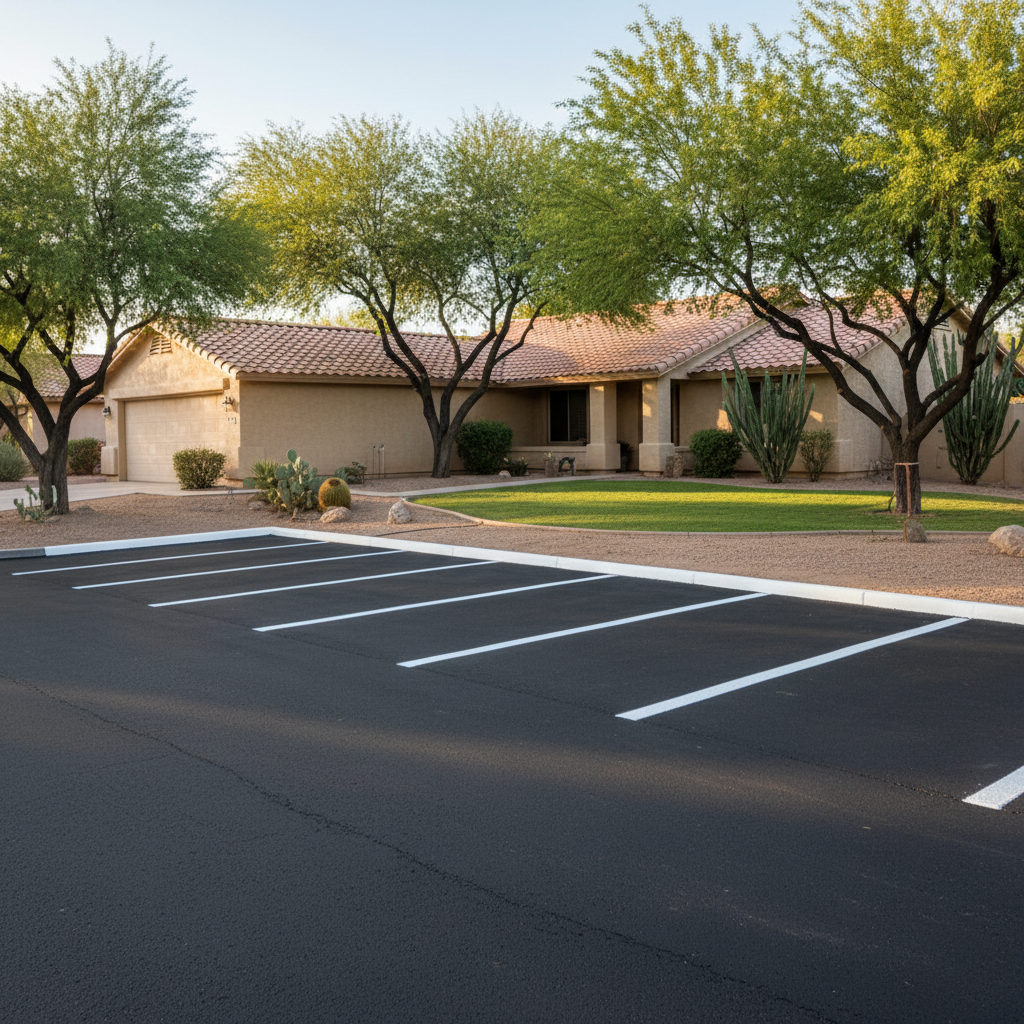
Alright, let's talk about asphalt striping. You might think it's a simple job – just paint some lines, right? Well, that's where a lot of homeowners in El Mirage get it wrong, and it can cost you big time down the road. I’ve been doing this for years, and I’ve seen plenty of folks regret their choices because they didn't know what to look out for. Here are the biggest mistakes I see, and how you can steer clear of them.
Mistake #1: Hiring the Cheapest Bid Without Asking Questions
This is probably the most common blunder, not just in striping, but in pretty much any home service. You get three bids, and you automatically go with the lowest one. I get it, everyone wants to save a buck. But with striping, the cheapest bid often means corners are getting cut. What kind of paint are they using? Is it traffic-grade, durable paint designed to withstand our brutal El Mirage sun and the constant wear and tear, or are they using something that’ll fade and chip in six months? Are they properly prepping the surface? If they're just slapping paint on a dirty, dusty, or oily surface, it won't stick. You'll be paying someone else to re-do it before you know it. Always ask about the materials and the process. A good contractor won't mind explaining it.
Mistake #2: Not Understanding the Scope of Work
You need to be clear about what you're paying for. Is it just restriping existing lines, or do you need new layouts? Are they marking fire lanes, ADA-compliant parking spaces, or just basic parking stalls? If you're adding new spaces or changing the flow, that requires more planning and often more paint. Some homeowners assume all the little details are included, but if it's not in the bid, it's probably not happening. Get everything in writing. A detailed proposal protects both you and the contractor. Don't leave anything to interpretation.
Mistake #3: Ignoring Pavement Condition Before Striping
This one's a biggie. You can have the best striping crew in the world, but if your asphalt is falling apart, those new lines aren't going to last. I've seen folks want fresh stripes on a parking lot that's riddled with cracks, potholes, and alligator cracking. It’s like putting a fresh coat of paint on a rusty car – it’ll look good for a minute, but the underlying problem is still there. Before you even think about striping, you need to address any major repairs. Get those cracks filled, potholes patched, and consider a sealcoat if your pavement is due. Fresh striping on a newly sealcoated surface? That’s going to look sharp and last for years. Trying to stripe over a crumbling surface is just throwing money away.
Mistake #4: Not Considering Local Regulations (Especially for Commercial/HOA)
This might not apply to every single homeowner, but if you're part of an HOA or managing a multi-unit property, this is critical. El Mirage has specific codes, especially concerning ADA compliance for parking spaces, ramps, and access routes. You can't just paint a blue rectangle and call it a day. There are specific dimensions, signage requirements, and access aisle markings that need to be followed. If your striping doesn't meet these standards, you could face fines or even lawsuits. A reputable company like El Mirage Asphalt Paving knows these codes inside and out. Don't assume your contractor does; ask them how they ensure compliance.
Mistake #5: Neglecting Proper Curing Time
You've got fresh, beautiful stripes down. Looks great, right? Now, resist the urge to drive on them immediately! Paint needs time to cure, especially in our desert climate. The heat can actually make it seem like it's drying faster, but that doesn't mean it's fully cured and hardened. Driving over wet or partially cured paint can track it, smear it, and ruin the crisp lines you just paid for. Ask your contractor about the recommended cure time and stick to it. It’s usually a few hours, but it varies depending on the paint type and weather conditions. Patience here saves you from headaches later.
Look, getting your asphalt striped isn't rocket science, but there are definitely right ways and wrong ways to go about it. By avoiding these common mistakes, you'll ensure your investment looks good, lasts long, and serves its purpose effectively. Do your homework, ask the tough questions, and don't be afraid to walk away from a deal that feels too good to be true. Your pavement will thank you for it.