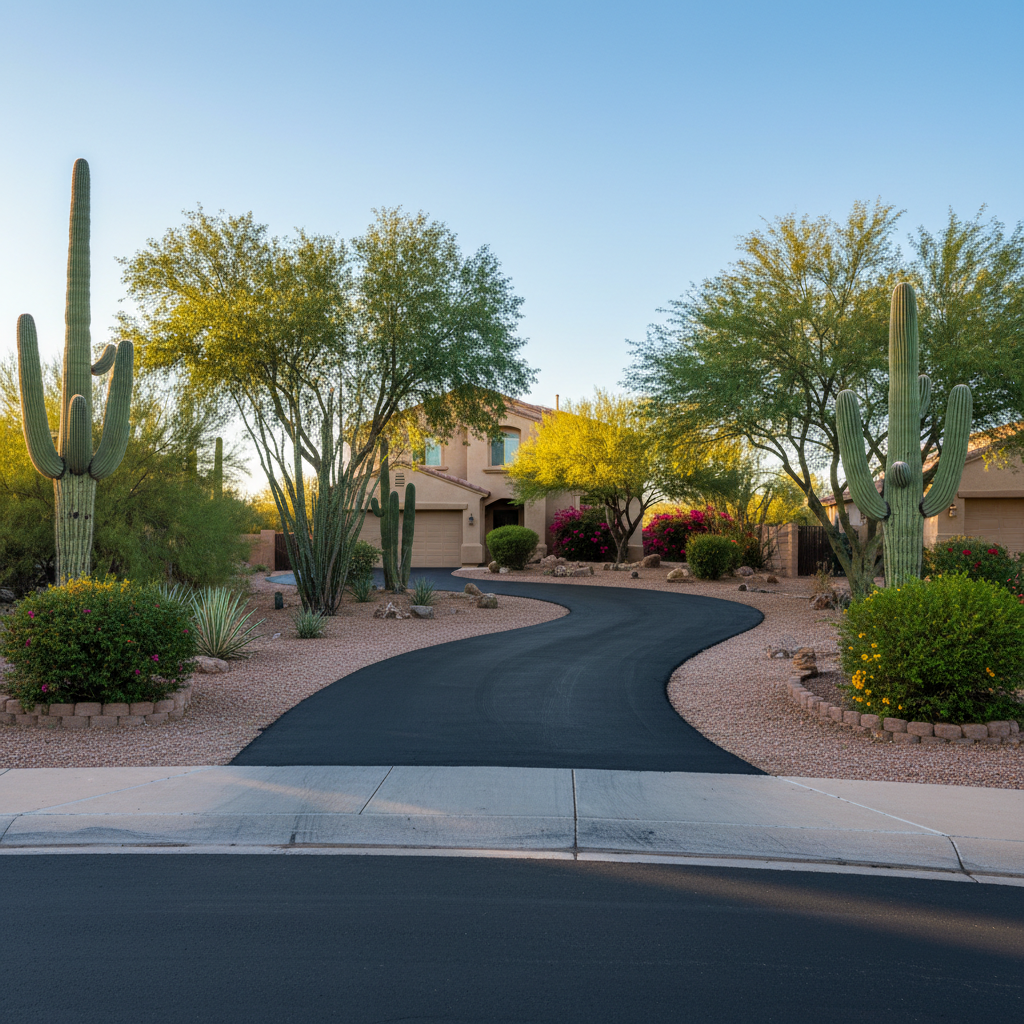
Alright, El Mirage homeowners, let's chat about slurry coating your asphalt. You've poured good money into that driveway or parking area, and naturally, you want it to last. But out here in the desert, "lasting" means really understanding our unique climate. You can't just slap a slurry coat down whenever you feel like it and expect it to hold up. It's all about timing, the weather, and a little year-round tender loving care.
When's the Best Time to Schedule Slurry Coating?
If you're thinking about getting your asphalt slurry coated, the absolute best time to do it in El Mirage is during our cooler, drier months. We're talking late fall through early spring – roughly October to April. Why then, you ask? Because slurry coating needs just the right conditions to cure properly and really bond with your existing asphalt.
We're looking for consistent temperatures, ideally between 50°F and 90°F. Our spring (March to May) and fall (October to November) usually hit that sweet spot perfectly. You want the pavement and air temperatures to be above 45°F and climbing, but definitely not below 50°F and dropping.
Trying to do it in the dead of summer, when daily highs can easily hit 106°F in July, is just asking for trouble. That intense heat can make the slurry 'flash dry.' This means it dries too quickly on the surface before it's had a chance to properly stick and cure underneath. What happens then? Cracking, poor adhesion, and a much shorter life for your new coating. It's kind of like trying to bake a cake at 500 degrees – burnt on the outside, raw in the middle.
Weather Conditions That Affect the Job
It's not just about temperature; a few other weather factors really matter for a good slurry coat:
- Humidity: Low humidity is your best friend here. Slurry coatings contain water, and that water needs to evaporate for the material to cure right. If the air is thick with moisture, that evaporation process slows way down. This stretches out drying times and can mess with the cure. Ideally, we want humidity below 50%, though we can sometimes work with slightly higher if everything else is perfect.
- Rain: This one's a no-brainer, honestly. You absolutely cannot apply slurry coating if rain is expected within 24-48 hours. Even a light drizzle can wash away fresh material or stop it from sticking, making all that effort (and your money) totally wasted. Our monsoon season, which officially runs from June 15 to September 30, brings those unpredictable, heavy downpours, especially in July and August. So, scheduling during monsoon season is a huge gamble.
- Wind: A little breeze? That's actually helpful! It gets the air moving and speeds up evaporation. But too much wind, say above 10-12 mph, becomes a real problem. Strong winds can mess up the spray pattern, leading to uneven application and streaks. It can also make the surface dry too fast (drying from the top down), which can cause premature cracking. And let's not forget the dust! El Mirage gets its share of dust storms, especially during monsoon season. You certainly don't want a fresh slurry coat covered in a layer of fine desert dust before it even sets.
Protecting Your Investment Year-Round
Once your slurry coat is down and cured, you've done a great job protecting your asphalt. But the fight against the El Mirage elements isn't over. Here's how to keep it in top shape:
- Keep it Clean: Regularly sweep or blow off debris. Leaves, dirt, and especially sharp gravel can wear down the surface over time. If you live near one of those unpaved roads common around the edges of El Mirage, you know how much dust and grit can accumulate. Get rid of it.
- Address Spills Immediately: Oil, gas, and other automotive fluids are asphalt's enemy. They break down the binder in the pavement, you see. Clean up any spills as soon as you spot them.
- Watch for Cracks: Slurry coating helps seal small cracks, but new ones can still form. If you see cracks developing, especially larger ones, get them filled promptly. Water is the biggest threat to your asphalt's foundation, and cracks are its entry points.
- Mind the Edges: The edges of your driveway are often the first to show wear. Try to avoid driving off the paved surface, especially if your driveway meets a soft shoulder.
- Reapply as Needed: A good slurry coat can last 5-7 years, but that really depends on traffic and sun exposure. Keep an eye on its condition. When it starts to look faded or shows signs of wear, it's time to think about another application.
Doing your part to maintain your asphalt, combined with a properly timed slurry coat from a local pro like El Mirage Asphalt Paving, will ensure your pavement stays looking good and performing well for years to come. It’s all about working with our desert, not against it.