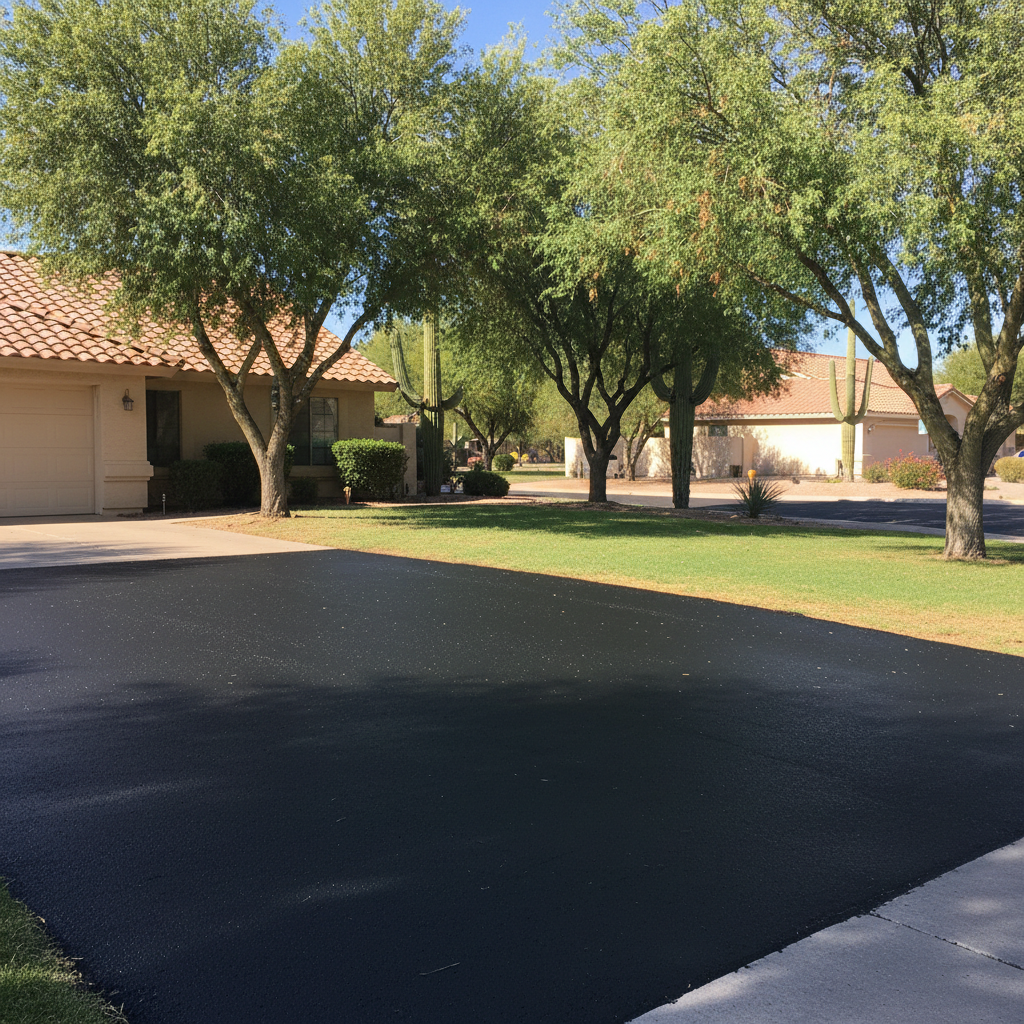
So, you’ve just had your asphalt driveway sealcoated here in El Mirage. Good call. It’s seriously one of the best ways to protect your pavement from our brutal Arizona sun and all the daily wear and tear. But getting it done? That’s only half the battle. If you really want that sealcoat to earn its keep and last as long as possible, you’ve got to treat it right. Think of it like putting sunscreen on your skin; you wouldn't just slap it on once and expect it to protect you all summer, would you?
Making Your Sealcoat Last in the Desert Heat
Our climate here in El Mirage is no joke. The intense UV rays and those wild temperature swings are tough on everything, especially asphalt. That's why sealcoating is so important, but it also means you need to be extra careful with its upkeep. The biggest killer of sealcoat isn't just cars driving over it; it's the sun drying it out and making it brittle. Here’s what I tell all my customers:
- Give it Time to Cure: This is probably the most crucial thing you can do right after we finish the job. I know it’s tempting to drive on it, but you absolutely have to follow the cure times we give you. Usually, that’s 24-48 hours for people walking on it and 48-72 hours for vehicles. If you rush this, you could ruin the sealcoat before it even has a chance to bond properly. That leads to flaking and tire marks way too soon.
- Keep it Clean: Sounds simple, right? But debris, dirt, and especially oil or chemical spills can really break down your sealcoat. Sweep or blow off your driveway regularly. If you spill something like oil or gas, clean it up immediately. Don't let it sit there and soak in. A little dish soap and water often do the trick for fresh spills, by the way.
- Avoid Sharp Turns and Heavy Loads: For the first few weeks, try to avoid sudden stops, quick acceleration, and sharp turns on your newly sealed surface. These actions can scuff or tear the fresh sealcoat. Also, if you’ve got a heavy RV or a big work truck, try to park it off the asphalt if you can. Or at least move its parking spot around to spread out the weight.
Regular Maintenance: Your Driveway's Best Friend
Beyond the initial cure, ongoing maintenance is pretty straightforward, but it makes a huge difference. You're not just protecting the sealcoat; you're protecting the asphalt underneath it, which saves you a whole lot of money down the road.
- Watch for Weeds: Weeds pushing up through cracks are a common problem, especially in older asphalt. They can really speed up damage. Pull them out as soon as you see them. A little weed killer in the cracks can help, too, but be careful not to get it all over the sealcoat itself.
- Address Cracks Promptly: Even with sealcoat, cracks can form over time. Small cracks let water get under your asphalt, and that’s a recipe for disaster — especially if it freezes (not common here, thankfully, but water infiltration is still bad). Get them filled as soon as they show up. This is a job you can sometimes tackle yourself with a good quality crack filler, or you can just call us.
- Don't Forget Drainage: Make sure water isn't pooling on your driveway. If you've got spots where water collects after a monsoon, that's going to wear down your sealcoat faster. Sometimes, a little landscaping adjustment can fix this.
Warning Signs Your Sealcoat Needs Attention
Your driveway will usually tell you when it's time for a check-up. Don't ignore these signals:
- Fading Color: If your rich black sealcoat is starting to look gray or dull, that's a clear sign its protective properties are fading. It's like your car's paint fading in the sun, really.
- Surface Cracks or Alligatoring: Small, interconnected cracks that look like alligator skin mean the asphalt underneath is drying out and becoming brittle. The sealcoat might be failing to protect it, or it's just reached the end of its life cycle.
- Loose Aggregate: If you're seeing small stones or bits of asphalt coming loose from the surface, your sealcoat isn't binding things together anymore.
- Potholes or Depressions: These are bigger problems, usually showing a failure of the asphalt base, not just the sealcoat. But if you see them, it means water is getting in, and your sealcoat isn't doing its job.
When to Call a Professional (Like Us!)
Look, I'm all for homeowners doing what they can, but some jobs are just better left to the pros. You should definitely give El Mirage Asphalt Paving a call if:
- You see significant cracking or potholes: These aren't just cosmetic issues; they're structural. We can assess the damage and recommend the right repair, whether it's patching or a more extensive fix.
- Your sealcoat is flaking or peeling extensively: This usually means the previous application didn't bond correctly, or the surface wasn't prepared right. We can strip it down and reapply it properly.
- You're unsure about the extent of the damage: Sometimes, what looks like a small problem can actually be a symptom of a bigger issue underneath. We can give you an honest assessment.
- It's been 2-3 years since your last sealcoat: Even with perfect maintenance, sealcoat has a lifespan. In our harsh El Mirage environment, reapplying every 2-3 years is a good general guideline to keep things protected. Don't wait until it's completely gone, okay?
Taking care of your sealcoated driveway isn't rocket science, but it does need a little attention. A small amount of effort now can save you a lot of headache and expense down the road. Keep an eye on it, address issues quickly, and don't hesitate to reach out if you're not sure what to do. We're always here to help.