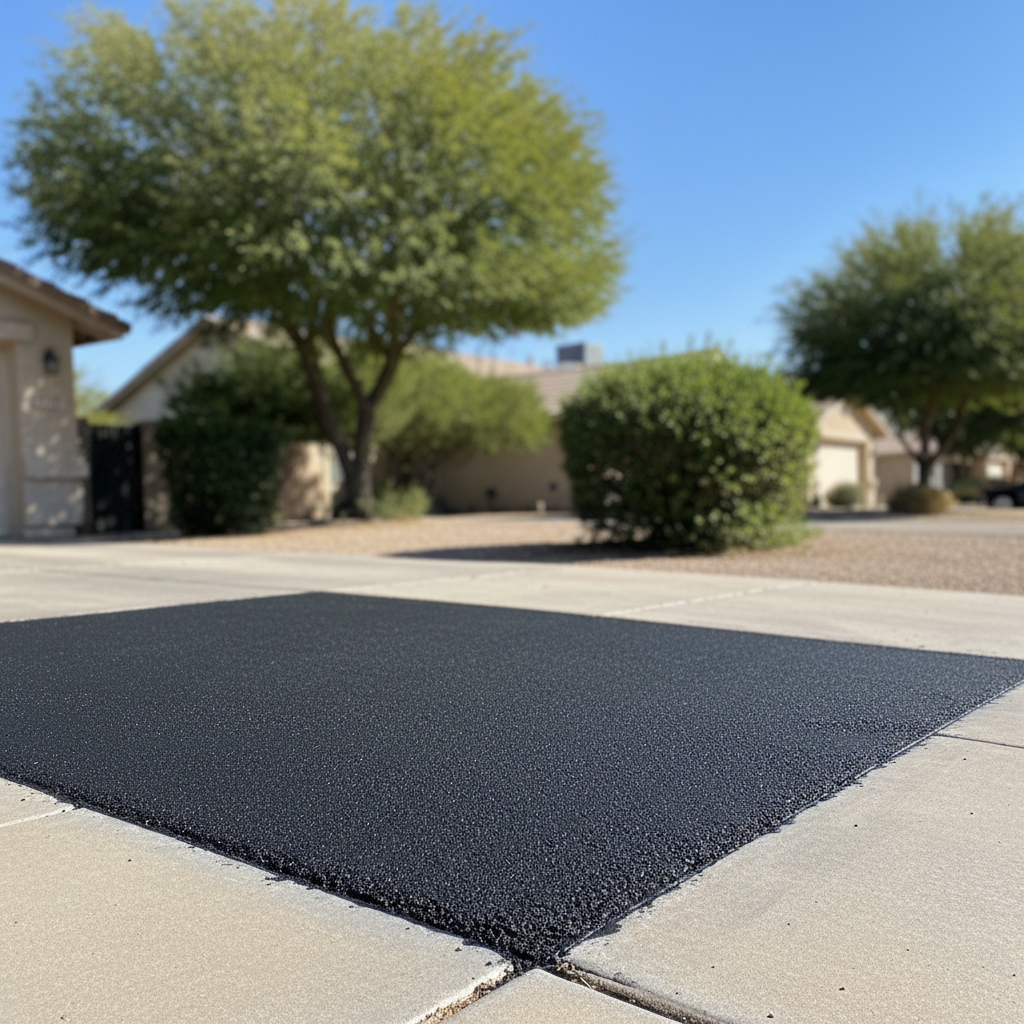
Alright, let's talk about asphalt patching. It's one of those things you don't really think about until you're staring down a nasty pothole or a spiderweb of cracks every time you pull into your driveway. As a contractor right here in El Mirage, I hear the same questions a lot from folks trying to figure out what to do. So, I figured I'd just lay out some straight answers for you.
What's the difference between a patch and a full replacement?
This is probably the question I get asked most often. Think of it like this: a patch is like putting a band-aid on a cut. It just fixes the immediate problem spot. A full replacement? That's more like getting a whole new arm. We rip out everything that's there and put down all new material.
You'd go for a patch when the damage is pretty localized – maybe a single pothole, a small section of really bad cracking, or a utility cut. But if your entire driveway is crumbling, sinking, or showing widespread alligator cracking, then patching is just throwing good money after bad. You'd definitely need a full replacement then. We always assess the overall condition to tell you honestly what makes the most sense for your budget and for the long-term health of your pavement.
When's the best time of year to get patching done in El Mirage?
Honestly, you can patch asphalt pretty much any time of year here in El Mirage, but some times are definitely better. The ideal conditions are when it's not scorching hot and not freezing cold. So, our spring and fall? Those are prime. The asphalt mix works best when it's warm enough to be pliable, but not so hot that it's curing too fast or getting sticky everywhere.
Summer patching is doable, sure, but it means dealing with those brutal 115-degree days we get. It puts more stress on the crew and the material. Winter patching? It can be done, but you really need to make sure the base is dry and the temperatures aren't dipping too low, especially at night. For the best, most durable results, aim for those milder months.
How long does an asphalt patch usually last?
That's not a simple answer, because it depends on a few big factors. First, what kind of patch is it? A temporary cold patch you buy at Home Depot might last a few months, maybe a year if you're lucky, especially with our intense sun and heavy monsoons. A professionally installed hot mix patch, done right, can last several years – sometimes even five to ten years or more if the underlying base is stable and it's maintained properly. That's a huge difference, right?
The quality of the original pavement around the patch matters too. If the surrounding asphalt is already failing, the patch might not hold up as well. And of course, traffic. A patch on a residential driveway that sees light car traffic will last a lot longer than one on a commercial lot with heavy trucks driving over it all day. We always use the best materials and techniques to maximize the lifespan of any patch we put down.
Can I just do a DIY patch myself?
Look, you can, but I generally don't recommend it for anything more than a very small, temporary fix. For a small pothole, you can buy cold patch asphalt, clean out the hole, pour it in, and tamp it down. It's a quick fix, and it'll get you by for a bit.
But for a long-lasting, durable repair, you need hot mix asphalt, specialized equipment to heat and compact it properly, and the know-how to prepare the area correctly. You've got to cut out the bad section, clean it thoroughly, apply a tack coat, lay the hot asphalt, and then compact it with a heavy roller. Without the right tools and experience, a DIY job often ends up failing quickly, and then you'll be paying a pro to fix your patch on top of the original problem. Save yourself the headache and call El Mirage Asphalt Paving for anything beyond a tiny, temporary fix.
What causes potholes and cracks in the first place?
Potholes and cracks are usually a sign of water getting where it shouldn't be. Here in El Mirage, we've got that expansive clay soil in some areas, which can shift and swell with moisture. That movement underneath your asphalt is a big culprit. Then you add in our extreme temperature swings – hot days, cooler nights – which cause the asphalt to expand and contract. This constant movement weakens the material over time.
Once a tiny crack forms, water seeps in. When it gets cold enough (even just overnight in winter), that water freezes, expands, and pushes the asphalt apart. Then, when traffic drives over it, the weakened area collapses, and boom – you've got a pothole. Poor drainage, heavy loads, and just plain old age also contribute. It's a combination of factors, but water and temperature are the main enemies.
How much does asphalt patching cost?
This is the million-dollar question, and it's tough to give a number without seeing the job. Patching costs depend on several things:
- Size and depth of the patch: A small, shallow patch is obviously cheaper than a large, deep one.
- Type of asphalt: Hot mix costs more than cold patch, but it lasts much longer.
- Preparation needed: If we have to dig out a lot of bad base material or deal with significant drainage issues, that adds to the cost.
- Accessibility: Is it easy to get equipment to the area, or is it a tight spot?
What I can tell you is that patching is almost always significantly less expensive than a full replacement. We'll come out, take a look, and give you a clear, no-nonsense quote so you know exactly what you're getting into. Don't go for the cheapest bid without understanding what's included; sometimes the lowest price means cutting corners on materials or prep, and that'll cost you more in the long run.
What should I look for in a good patching contractor?
You want someone who's local, experienced, and stands behind their work. Here's what I'd tell you to ask:
- Are they licensed and insured? Absolutely non-negotiable. Don't let anyone work on your property without it.
- Do they provide a written estimate? It should be detailed, outlining the scope of work, materials, and cost.
- What kind of asphalt do they use? For durable patches, you want hot mix asphalt.
- How do they prepare the area? A good contractor will clean out the hole thoroughly, cut clean edges, and apply a tack coat.
- Do they guarantee their work? A reputable company will offer some kind of warranty on their patching.
- Check references or reviews. See what other homeowners in El Mirage or the surrounding areas say about them.
Don't be afraid to ask questions. You're paying for a service, and you deserve to understand what's being done and why. Getting a solid patch done right can save you a lot of grief and money down the road.