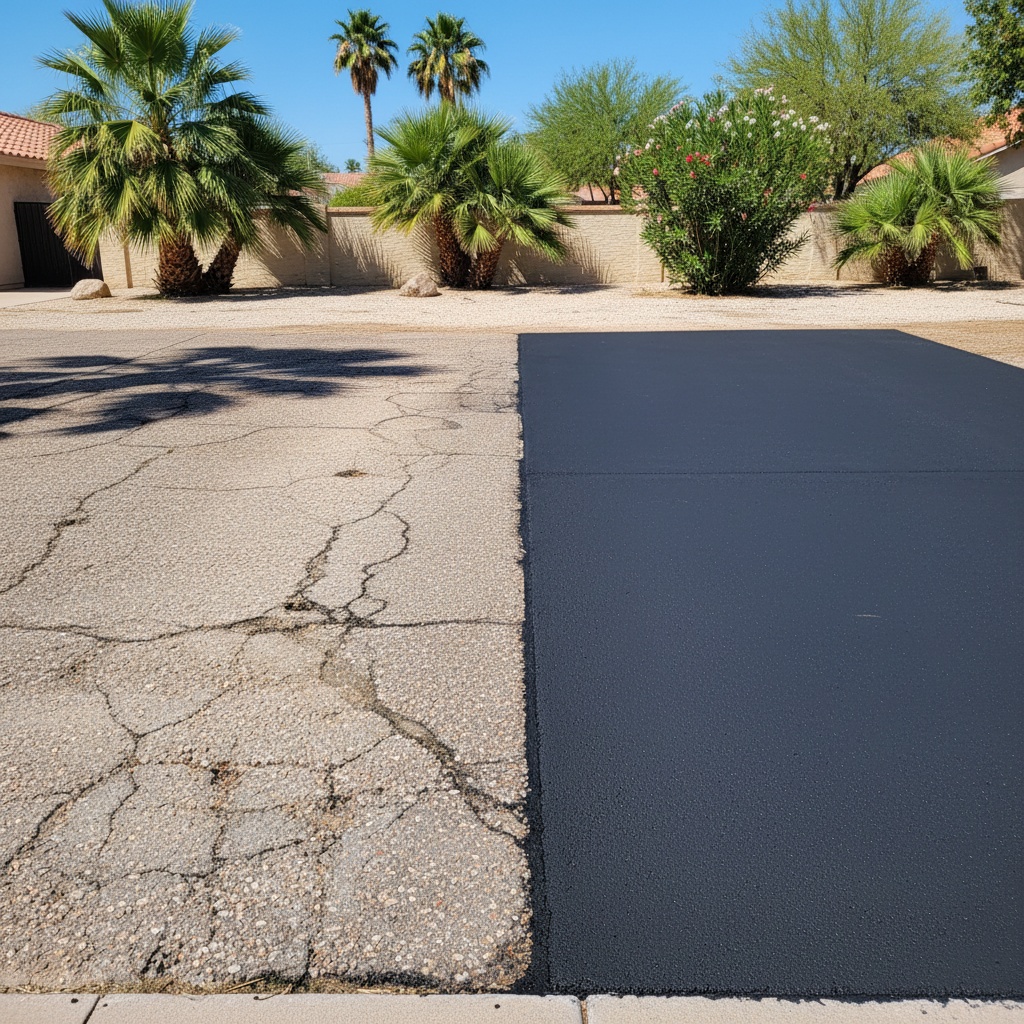
Your asphalt driveway or parking area is showing its age, huh? Cracks, potholes, maybe some alligatoring. It happens, especially with our brutal Arizona sun and the way the ground shifts out here in El Mirage, especially in those older neighborhoods with the expansive clay soils near Luke Air Force Base. When it's time to patch things up, you've generally got two main ways to go: infrared asphalt repair or the more traditional saw-cut and remove method. I've seen both done a million times, and I'm here to tell you what's what.
Infrared Asphalt Repair: The Quick Fix
Let's start with infrared. This method uses special equipment that heats up the existing asphalt to make it pliable again. Think of it like reheating leftovers in a microwave, but for your driveway. Once it's hot and soft, we rake out the damaged area, add a bit of new asphalt mix and rejuvenator if needed, and then compact it all down. The idea is that you're blending the new material seamlessly with the old.
The Good:
- Speed: It's fast. We can get in and out pretty quick, which means less disruption for you.
- Cost (Sometimes): For smaller, isolated repairs, it can sometimes be a bit cheaper upfront because there's less material to haul away and less new material to bring in.
- Seamless Look: When done right, it can blend in pretty well, especially if the surrounding asphalt isn't too faded or damaged.
The Not-So-Good:
- Durability: This is where I get a little cautious. While it looks good initially, infrared patching often isn't as robust as a full-depth repair. You're essentially re-working existing, often aged, asphalt. If the base underneath is failing, or if the asphalt itself is severely oxidized and brittle, simply heating and re-compacting it won't fix the underlying problem. It's like putting a band-aid on a gash.
- Limited Application: It's best for surface-level issues, minor potholes, or areas where the asphalt isn't too far gone. For deep cracks, widespread damage, or areas with significant base failure, it's just not the right tool for the job.
- UV Damage: Our sun is no joke. The asphalt you're reheating has already taken a beating from UV rays. Reheating it doesn't magically restore its original properties.
Saw-Cut and Remove: The Gold Standard
Now, let's talk about the saw-cut method. This is what El Mirage Asphalt Paving generally recommends for most serious repairs. We use a saw to cut out a clean, rectangular section around the damaged area. We then remove all that old, compromised asphalt and any failing base material underneath. Once that's out, we prepare the sub-base, lay down fresh, hot asphalt mix, and compact it thoroughly.
The Good:
- Durability: This is its biggest advantage. You're removing all the bad stuff and replacing it with new, virgin asphalt. When done correctly, with proper compaction and a good base, these patches can last for years and years. You're addressing the root cause, not just the symptom.
- Structural Integrity: By ensuring a solid base and new material, you're restoring the structural integrity of that section of your pavement.
- Versatility: It works for almost any type of damage – potholes, deep cracks, areas with base failure, utility cuts, you name it.
- Clean Lines: The cut edges make for a very clean, professional-looking repair, even if the color difference between old and new is noticeable at first.
The Not-So-Good:
- Cost (Usually): Generally, this method costs more upfront. You've got more labor involved, more material removed, and more new material brought in.
- Time: It takes a bit longer than infrared, as there's more cutting, digging, and hauling involved.
- Appearance (Initially): You'll have a noticeable seam and a color difference between the new, dark asphalt and your older, faded pavement. Over time, the new patch will weather and blend in better.
My Recommendation for El Mirage Homeowners
Look, I'm not going to sugarcoat it. While infrared patching has its place for very minor, superficial issues, for most homeowners in El Mirage, especially with our intense climate and the wear and tear we see, the saw-cut and remove method is almost always the better long-term solution.
Why? Because you want a repair that lasts. You don't want to be calling me back in a year or two to fix the same spot again. Our sun bakes asphalt, and the temperature swings can be extreme. If you're not addressing the problem with fresh, high-quality material and a solid base, you're just kicking the can down the road.
Think of it this way: if you had a leaky roof, would you just paint over the wet spot, or would you replace the damaged shingles? You'd replace the shingles, right? It's the same principle with your asphalt. Invest a little more upfront for a repair that's going to hold up to the El Mirage heat and keep your driveway looking good and functioning properly for years to come. Give El Mirage Asphalt Paving a call, and we can take a look at your specific situation and give you an honest assessment.